
It isn't a networking event. It isn't a panel. It isn't content.
The Context Salon is a conversation — the kind that actually goes somewhere.
Next Salon
We bring philosophy, history, behavioral science, design, and lived experience into the same room. Not to agree. To think better.
What
A curated gathering for leaders, practitioners, creatives, and independent thinkers who operate at the edges of their disciplines.
We explore:
What's shaping our organizations, industries, and communities right now
What's shifting in culture, systems, and collective understanding
What we're not seeing clearly — and why
What it means to lead, build, and decide in conditions of genuine complexity
Who
You don't need a title to belong here. You need genuine curiosity and the willingness to be changed by a conversation.
People who bring more than one lens to a room
Leaders who are tired of conversations that stay on the surface
Practitioners who want to think beyond their function
Anyone who believes that understanding is the most durable competitive advantage
Why
Because serious thinking doesn't happen alone.
It happens in exchange. In friction. In the moment someone from a completely different field names the thing you've been circling for months. Context Salon exists to create those moments — deliberately, consistently, and across disciplines.
How
No scripts. No panels. No performance of expertise. Just thinking — shared, rigorous, and alive.
Guided but open dialogue — led by questions, not agendas
Cross-disciplinary perspectives that challenge assumptions
Ideas that evolve in real time, shaped by who's in the room
For many, Context Salon is where the relationship with See Context begins.
A chance to experience the thinking before formal engagement. A place to build something rarer than a network: intellectual community.
Past Discussions
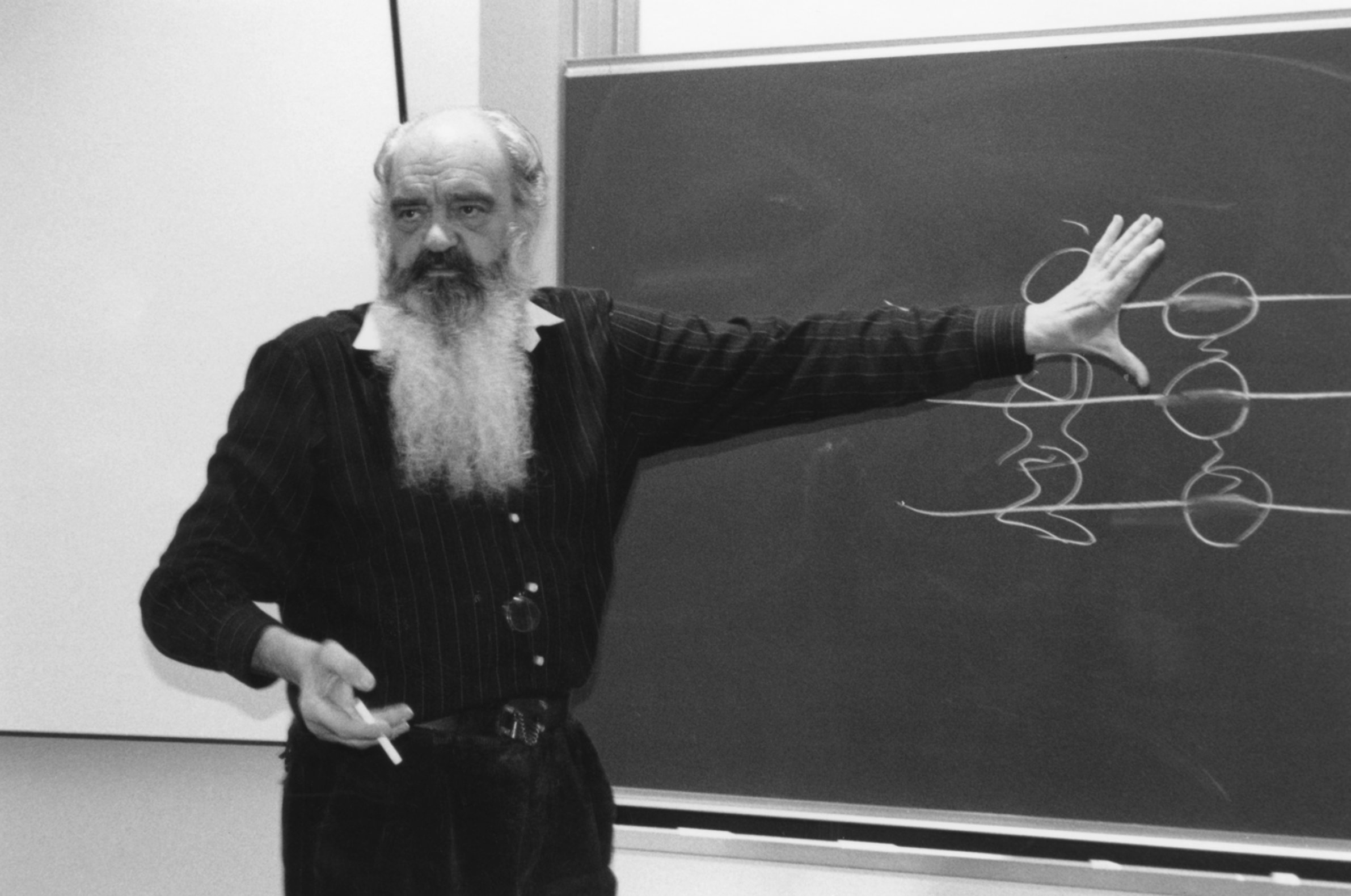
Looking Back to Build a Better Future
Chile, 1973. A control room, a coup, and the question we carried all day: what if things had gone differently?
Joel opened where this began for him, a high school classroom in the early ‘80s, learning what happened to Allende's Chile and to Stafford Beer's Project Cybersyn, the cybernetic experiment that tried to run an economy on real-time feedback before the world had the machinery for it. Not nostalgia, he reminded us. The road not taken can still teach us how to choose.

The Patterning of Hope
I’ll admit I was a little proud today. Bill Sharpe has spent decades developing Three Horizons — the framework that quietly underwrites much of how I’ve come to think about the future — and having him in the room felt less like hosting a guest than like sitting down at the source of a river I’ve been drinking from for years.

A Brave New 1984
We came in with a framework — Orwell versus Huxley, hard power versus soft seduction — and left with something more unsettling: the recognition that the dichotomy itself might be the distraction. What we’re living inside isn’t one model or the other. It’s both, running simultaneously, and the system is so efficient at this point that most of us consent to it willingly.

The Sacred, the Profane, and the Panoptic Structures of Power
The latest Context Salon convened our largest group yet of a diverse set of thinkers who explored the intersection of meaning-making and surveillance through the lens of two primary concepts: the Axis Mundi (representing the sacred and central meaning) and the Panopticon (representing structures of power and surveillance). The overarching concern is that in the modern era, these two concepts are merging, where the things people look to for meaning are now looking back at them to control and surveil.

From Her to Here: Attachment Hacking and the Rise of AI Psychosis
The latest Context Salon convened a diverse group of technologists, creatives, policy thinkers, retirees, parents, and skeptics for a profound investigation into the emerging Attachment Economy.
This session, inspired by the Center For Humane Technology and Spike Jonze's 2013 film Her, transitioned from cinematic musings to a critical examination of our evolving emotional infrastructure.
Brave New Enshittification
We didn’t sleepwalk into the surveillance state. We built it eagerly, one tap at a time, because it came wrapped in convenience, validation, and a dopamine-bright ‘like’ button.
Now, as lawmakers fumble toward rules for yesterday’s social platforms, artificial intelligence is already rewriting the terrain. We are drafting treaties for the last war while the next one is being waged in real time, quietly, at scale, and without our consent.
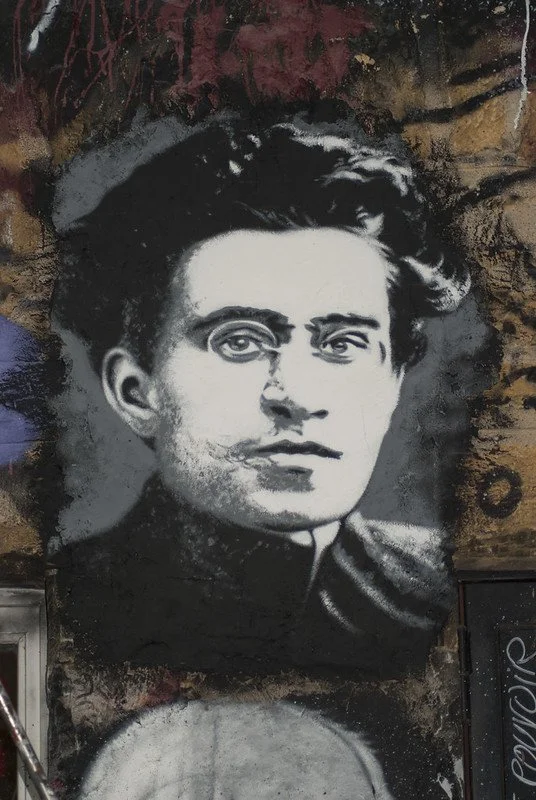
Antonio Gramsci’s Warning
Focusing on the philosophical concept of interregnum, which describes a transitional period when "the old is dying, but the new cannot be born" the Context Salon explored whether contemporary society is experiencing such a period, characterized by "morbid symptoms" like the breakdown of social contracts, political polarization, and rising authoritarianism globally.
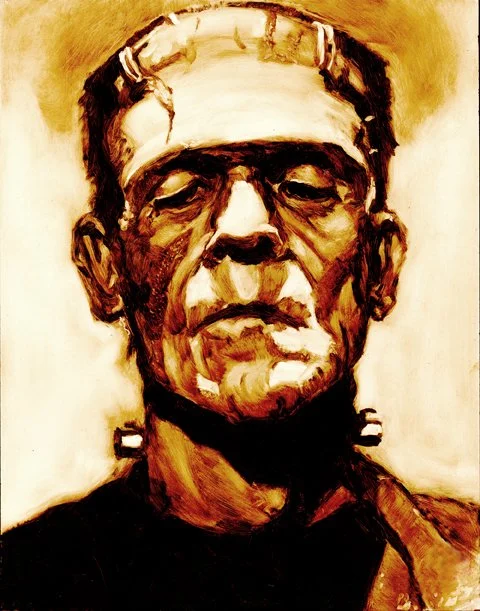
Monsters Among Us?
Considering the philosophical and ethical implications of creation, using the book Frankenstein as a central metaphor, participants sought to determine whether creation is inherently neutral or if it is inevitably entangled with ethics and the influence of society.
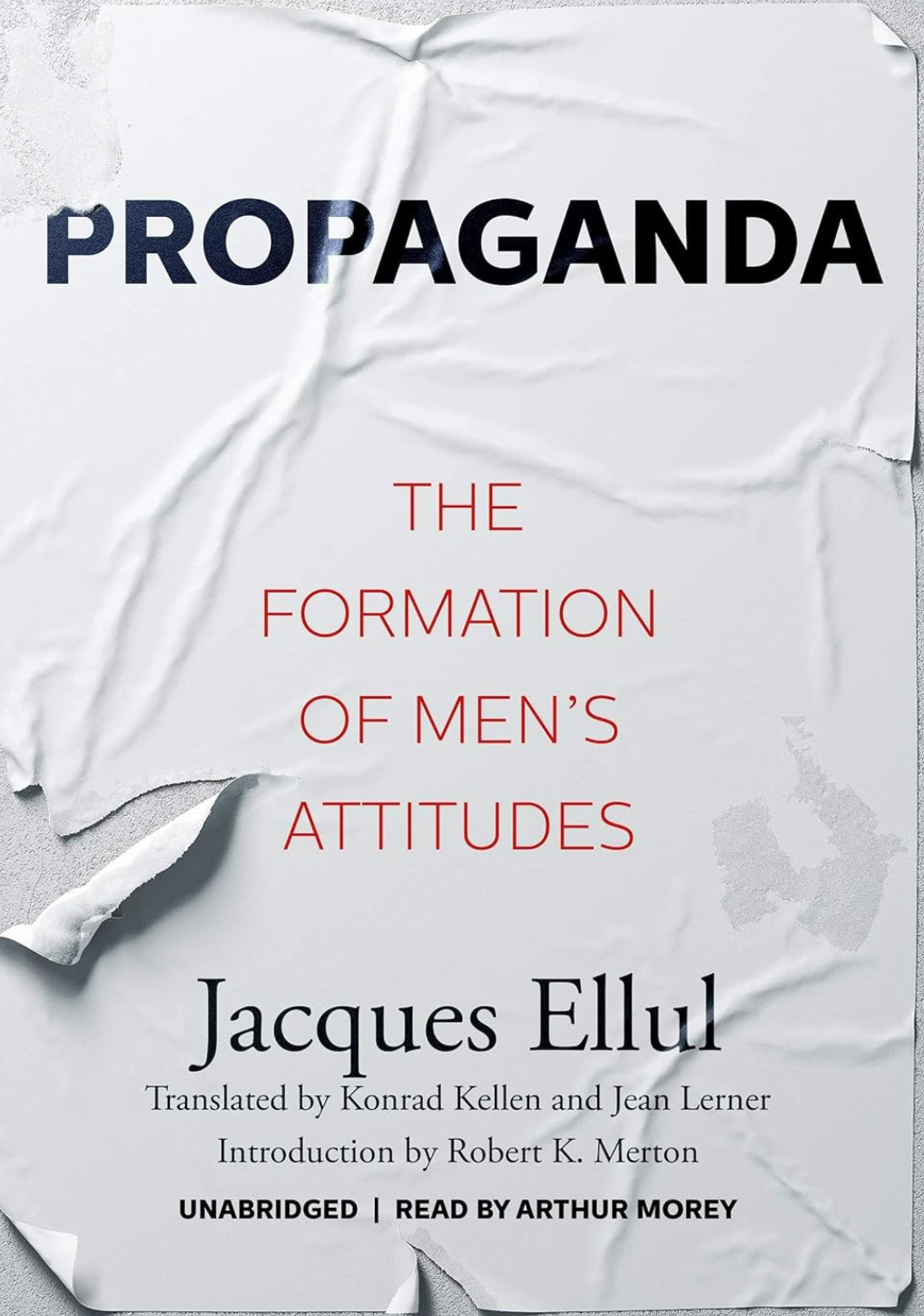
Propaganda: Technology’s Siamese Twin
In Jacques Ellul’s 1965 work Propaganda: The Formation of Men’s Attitudes, Ellul essentially states that technology gives us the feedback loop for propaganda to pervade our being.

Illusory Images of the Cyborg
The conversation centered on Donna Haraway's definition of a cyborg as a cybernetic organism and explored whether current technology, from simple aids like glasses to advanced Artificial Intelligence (AI), has made humans extensions of these tools rather than the reverse.

Religion and Nothingness
The conversation was framed around Keiji Nishitani's idea that the concept of "God is dead" can be an opportunity for religious awakening rather than nihilism.