
Monsters Among Us?
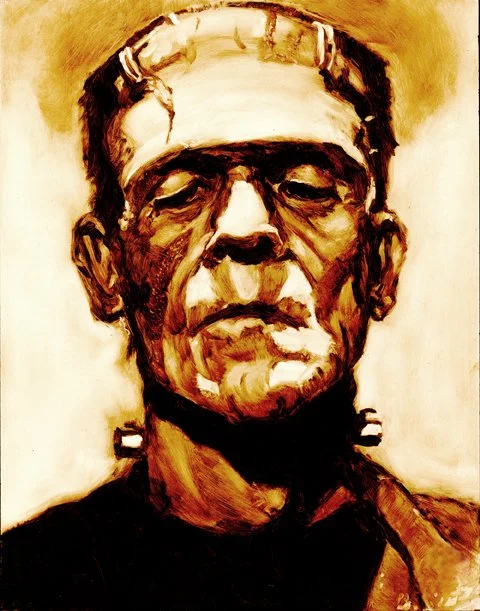
Considering the philosophical and ethical implications of creation, using the book Frankenstein as a central metaphor, participants sought to determine whether creation is inherently neutral or if it is inevitably entangled with ethics and the influence of society.
Key topics explored include the role of humanity as creators or "gods," the potential negative consequences of ambition and unfettered progress, especially in the context of technology like Artificial Intelligence (AI), and the challenges posed by a Eurocentric, hyper-individualistic system driven by profit and power.
The discussion concluded with reflections on societal stress, historical cycles of unethical practices, and the collective responsibility to define a more humane future beyond current destructive patterns.
What We Discussed
The Monster as a Reflection of Humanity/Society
The monster's evil is not inherent but is cultivated by its surroundings.
• Innocence and Ostracization: The creature is characterized as having been born or created as a "clean slate" or with "innocence," initially trying to learn how humanity and society work, including concepts of love and acceptance.
• A "Sponge" for Cruelty: The flaw in the entire narrative is attributed to "the culture, the society," not to Frankenstein himself. The monster is seen as less innocent and more of a "sponge," absorbing cues from humanity.
• Monstrous Humanity: Humanity itself is described as "monstrous," "unchecked," "unbridled," "cruel," and "violent". Therefore, the monster's actions simply reflect this "visceral, almost barbarian nature" that exists beneath society's "sophisticated and polished and polite" veneer.
• Unwilling Participant: The monster as an "unwilling participant in our world". The ensuing violence was the monster's response to being ostracized.
• Flaw in the Creator: Ultimately, the monster (or any creation) is a reflection of the creator. The flaws lie "not in the creation," but "in the bias of the creator". This is likened to a copy machine: the copy is only as good as the original made from it (humanity, in this case). Victor Frankenstein himself "acts out" based on how he was treated when he was young, demonstrating how society impacts future actions.
Societal and Economic Drivers Affecting Ethics
The fundamental structure of the current system is presented as inherently hostile to ethical consideration, driven primarily by monetization and individualism.
• Monetization Trumps Ethics: In the current system, ethics often become "fuzzy" or secondary, as everything is judged by the "bottom line"—"Can it be monetized?"
• The Radical Notion of the Individual: The core philosophical shift identified is the adoption of a "radical notion of the individual" without an accompanying concept of society. This is traced back to Adam Smith's ontology, leading to the neoliberal theories of Milton Friedman and Frederick Hayek, and culminating in rational choice theory. This framework promotes the idea that "greed is good" and that maximizing profit is the sole objective.
• Removal of Regulation and Ethics: This radical individualism means that any notion of regulation, ethics, justice, or "unanticipated consequences has just been removed from the system" because they are perceived to "mess up the productivity and efficiency" of the individual operating in self-interest. This leads to a loss of the ability to apply ethical standards, even if they were considered.
• Wealth, Power, and Influence: The goal of modern creation, such as in the AI industry, is identified simply as "wealth and power for those with wealth and power," alongside influence. This concentration of private property, wealth, and power creates systems that operate "without oversight and without any participation of the public."
Seeking a Better Path / Way Forward
A central theme for moving forward involves challenging the current destructive cycles driven by self-interest and redefining humanity’s fundamental goals.
• Redefining Success and Winning: The current ethical framework is described as being "founded on a lot of unethical practices." Given that history shows we are "trapped in a cycle for years" where the only thing humans seem capable of creating is destruction, a critical step is to "redefine what winning looks like."
• Establish a Baseline for Humanity: Before advancing universally, society must first "benchmark and baseline humanity." The participants acknowledge that the definition of "what it is to be human" is currently unsettled "globally, culturally, [and] emotionally." Resolving this fundamental question is necessary because humanity currently exists "somewhere between monsters and gods."
• Prioritize Collective Good over Individualism: The current system is criticized for having adopted a "radical notion of the individual" without a concept of society, leading to the removal of ethics and regulation in favor of maximizing profit. To move forward, actions must be guided by finding a "center" and acting on it in a "Humane way that serves all of humanity, not just my own ethic."
• Reintroduce Care and Spirit: One participant suggests exploring the idea of "care" as part of the answer, helping "everybody feel cared for in their needs, their survival". This shift involves operating from a place of "spirit" and "love," rather than "ego" and "fear". Concepts like Ubuntu ("I am because you are") and the Native American idea of standing on the shoulders of seven generations are offered as frameworks that emphasize interconnectedness and posterity.
Read the notes, review the deliverables, and listen to the Deep Dive podcast in the Notebook.
Upcoming Salon
Previous Salons



Chile, 1973. A control room, a coup, and the question we carried all day: what if things had gone differently?
Joel opened where this began for him, a high school classroom in the early ‘80s, learning what happened to Allende's Chile and to Stafford Beer's Project Cybersyn, the cybernetic experiment that tried to run an economy on real-time feedback before the world had the machinery for it. Not nostalgia, he reminded us. The road not taken can still teach us how to choose.